
Understanding Cyprus Tax Residency Rules
Cyprus has become one of the most attractive jurisdictions in Europe for individuals seeking tax efficiency combined with a high quality of life. A key reason for this is the flexibility of its tax residency framework.
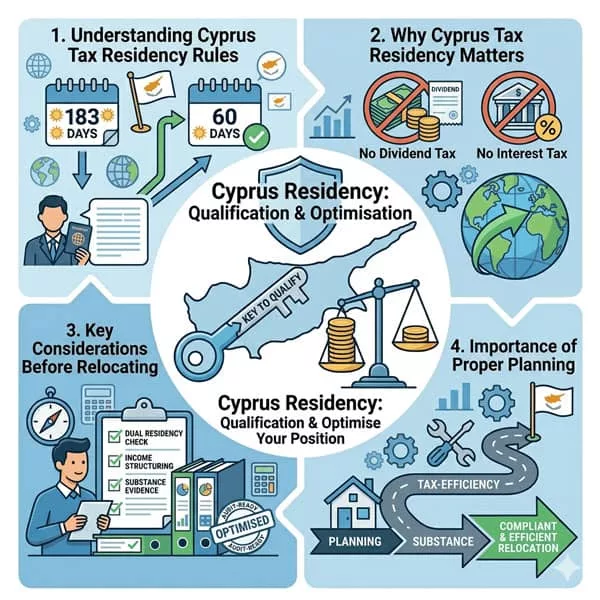
There are two primary routes to becoming a Cyprus tax resident: the traditional 183-day rule and the more strategic 60-day rule.
The 183-day rule is straightforward — if you spend more than half the year in Cyprus, you are considered tax resident. However, the 60-day rule allows individuals with international lifestyles to structure their affairs more efficiently, provided certain conditions are met, including maintaining a residence and having economic activity in Cyprus.
Why Cyprus Tax Residency Matters
Cyprus tax residents who qualify as non-domiciled individuals benefit from a highly favourable regime. In practice, this means no tax on dividend income and no tax on interest income, making Cyprus particularly attractive for investors and business owners.
That said, tax residency is no longer just about days spent in a country. Authorities increasingly focus on substance, including where decisions are made and where real economic activity takes place.
Key Considerations Before Relocating
Many individuals underestimate the importance of proper planning. Issues such as dual residency, incorrect structuring of income, or lack of substance can create complications.
A structured approach ensures that your relocation is both compliant and efficient.